Saturday, 10 May 2014

The Joys of Hot Season

N’Djamena has been reported as being one of the hottest cities in the world. The height of hot season has just been upon us here and the temperatures continue to daily reach the mid to high 40’s, and even occasionally cross the 50c line, it is not my favourite time of the year here. While I await spontaneous combustion to finally take me, or to melt into a pool of sweat, it is very easy to let the misery take over. A few weeks into this, however, enough is enough. I have decided that now is the time to think positive. And so, here we are, the positives sides of hot season (may need to get creative!)…..

1.    Top reason- hot season brings with it mango season. The huge, sweet juicy fruits offer a source of much delight and creative spirit as the team here come up with 101 different thing to do with a mango: Mango crumble, mango ice cream, mango just as mango, mango chutney… Any more ideas or suggestions are welcome...

Mangoes, even bigger than cats!

2. Hot season provides the ultimate extreme de- tox experience for the whole body as you drink litres and litres and litres, to then loose it all again through your pores. Plus, the frequent hot sandstorms that blow through can provide an incredibly intense, and occasionally painful, exfoliation!

3. Opening the fridge is always a surprise, finding a computer battery and perhaps a collection of candles, amongst bottles of luke warm water and wilting vegetables

4 . Speaking of candles, take them out of the fridge and you can make your own piece of modern art


5. And speaking of the fridge, err, trying to think of something positive to say about it in hot season… Oh yes, new experiences. I now find myself on a daily basis doing something I had never before considered necessary to do- watering my fridge!


6.  And should, on your way to the fridge with a bowl of water, you accidently tip the bowl over flooding the kitchen (or happily, soaking yourself), fear not. Don’t waste precious energy by clearing it up, give it 5 minutes and the floor (or yourself, excluding the sweat) will once more be as dry as bone. Being dry and crispy is true, not only of clothes and water spillages, but also for fruit and vegetables; they do not rot, they dry. So too for a poor deceased frog I found while clearing out a store room!

Crispy

7. You also see things you never considered possible, like melting solar panels. Surely solar panels should be ok in the heat, being designed to be put in the sun and all? But not the Chadian sun. I’ve been through 2 solar panels so far this year and the solar run traffic lights in town were out of order for some weeks while the melted panels were replaced (not that it had any impact on the driving conditions!)

8. Costs of running a gas cooker are reduced- for cooking and baking, chocolate and butter come ready melted and water boiled 12 hours previously remains hot enough to brew a cup of tea with. (Yes, it may be 40 plus degrees, but there is always a place for a cup of tea!)


9. Sleeping under the stars is a daily routine to escape the heat that the house walls have absorbed during the day and continue to radiate back into the house during the night. (Either that, or, as I did when I was doing language learning in town and couldn’t sleep outside due to rats the size of small dogs, preparing to go to bed involved many steps to achieve a level of coolness compatible with sleep- spray bed, shower, put on pyjamas, clean teeth, spray bed again, shower with pjs on, soak towel in water, spray bed again, lay on wet bed in wet pjs, cover in wet towel, direct fan straight on to you- fine for around 30 minutes until towel dry and then try to ignore the increasing sweating until it becomes unbearable and start the process again!)

My Outdoor Bedroom- Minimalistic, but Ventilated

10. I now have a new found respect and appreciation for that everyday commodity that is salt. Ignoring all those messages about reduce salt intake I heard, and even gave before leaving the UK, here I add it to everything I eat and at least once a day, half a teaspoon to my juice in a desperate attempt to replace some the salt lost through excessive sweating.

So there we are, a whole 10 positives of hot season! But to finish off, here is a bonus positive of hot season:


When it all gets too much, the heat is overwhelming, everything you touch is hot, all energy is sapped and the numbers on the thermometer read 50.1c there is always the hope that maybe, just maybe, this will be the hottest I will ever have to be again, and from this moment on, it will always be just that tiny bit cooler!

Its not clear, but here is proof that it does actually get above 50c outside while it is a balmy 39.6c in my lounge. 

Saturday, 1 March 2014

An Exciting Step Forward

It may come as no surprise to you who read this blog regularly when I say that I have a bit of a soft spot for the children I meet here in Chad. Yes, many of them are terrified of the strange colour of my skin and I can’t get anywhere near them without them screaming while the babies rarely wear nappies so having a cuddle with them can be a risky business! For older children, especially in the villages, their childhood is short lived as they become involved in the household tasks and looking after younger siblings. School is attended by some, but this can be intermittent and illiteracy is a real challenge here. In the evenings, when daily tasks have been completed and the heat of the day cools, toys are made from odd bits of sticks or rubbish found around the place. One popular game I’ve seen for little girls is to tie an old broken flip flop to their back as they carry on with their important tasks with their ‘baby’ securely attached.

Life for children here can be tough and in my line of work, obviously it is the health of the children that has particularly struck me since my arrival to Chad. Children who are undernourished, sick with easily preventable illnesses and diseases or children who are bought to the hospital too late have been challenging and difficult situations to see. Just over a year ago, the Hunger Prevention Programme was launched at Guinebor II in a bid to try and reduce the number of children suffering from easily preventable illness and to improve their health. During the first year of this project a new clinic was established available to all children to be weighed and receive free nutritious food, as well as the mothers being taught basic health promoting practices individually and in group settings.

However, a significant part of the project has only just been realised as the necessary equipment was located, bought, transported from Europe to Chad and finally installed in the hospital. It is with great excitement that the hospital here can now offer a fundamental service in child health- vaccinations.

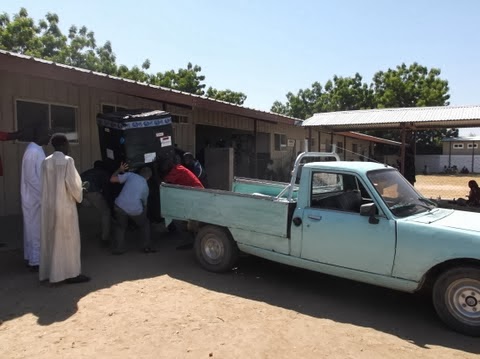
The logistics of offering such a service have not necessarily been straight forward. For example, maintaining a strictly controlled cold chain for the storage of the vaccines is an important consideration. Unlike the UK, during some months of the year the temperatures in Chad are daily in the high 40’s and can occasionally break the 50C threshold. With no electrical power available, maintaining a cold chain of 2-8C is easier said than done. However, after much research a World Health Organisation approved solar powered vaccine fridge was sourced, funded by the Hunger Prevention programme and, having travelled from South Harrow, arrived a few weeks ago amidst great excitement. (With its ridiculously thick insulated wall to keep the cool in and the heat out, there was a significant sigh of relief when, after all the exterior packaging was stripped, it could indeed be squeezed through the door of the pharmacy with millimetres to spare!)


In the UK I had a basic understanding that vaccines were important, but it was only once I came here and witnessed the horror and distress of tetanus, the devastating effects of polio and the needless deaths of measles that I now have a fuller appreciation of something that in the UK I always took for granted.

Before vaccinations were available at Guinebor hospital, families had to walk to other health centres 15km away. Ignorance and misunderstanding of vaccines also contribute to the low vaccination rate of children in the local villages. Having a vaccination programme is promising for the local community, and I hope will reduce to one aspect of the many challenges children face growing up here.

 The run up to the launch of the programme, with the the arrival of the fridge, the training sessions from the World Health Organisation and the many practical considerations such a service requires were exciting, but it was nothing compared to the joy I felt of seeing the first child being vaccinated!

Tuesday, 10 December 2013

Miniature Miracles

 Working in a hospital with limited resources brings with it many challenges. But is also brings with it a real sense of amazement when, despite the lack of technology and the few basic drugs available, lives that look to be in serious danger miraculously are turned around. Over the past 4 days I have seen 2 such events.

Last Friday saw a tiny baby girl born 2 months premature 2 weeks ago in her village. She is her parents first and they are clearly besotted by her. Being so tiny though, feeding her was difficult and despite her parents’ best efforts she came to us very dehydrated and having difficulty breathing. She weighed just 1.200kgs. Her outlook did not look good and what little hope there was quickly faded when she stopped breathing. Quickly starting resuscitation, initially by basic mouth to mouth and then with a bag and mask, she started to breathe again and her slow heart rate picked up.

From that moment on, my day, and then much of the weekend, passed in a blur of giving fluids, antibiotics, monitoring her heart rate, oxygen levels and wrapping her up in yet more blankets, hats, jumpers and booties to ward off the chilly 25c nights! Unlike the many complex respiratory support systems found in UK hospitals, here we have simple oxygen concentrator which we used to help this little baby. The smallest mask we had completely covered her face!

By Sunday afternoon the little listless rag-doll that had been bought in 2 days previously was wriggling around, no longer needing oxygen and was able to take a few drops of milk by a syringe. Incredible! By Monday she was drinking all of her required milk so we could stop giving her fluids every 2 hours by the drip in her hand. Yesterday, as I sat with her parents helping them with feeding their precious little girl they told me they had given her the name Rebecca. What a privilege!

Me with Mum and Baby Rebecca

The second miniature miracle happened Sunday evening. A lady who had previously already lost 2 babies at birth came into the hospital in labour needing an emergency caesarean. As quickly as we tried to start the operation we thought we may already be too late. Her baby was born not breathing with a very weak pulse. I was meant to be giving the anaesthetic at the time so having given all the required medicine I ran over and helped a visiting American Doctor to resuscitate the baby while Dr Andrea continued to operate on the lady and Dr Mark was called to assist Andrea.  

The baby seemed to be making no attempt to breathe but we just kept on going. Finally her heart rate picked up and then there was some definite, if very feeble, breathes. In retrospect we realised that the whole resuscitation was only 20 minutes long, but at the time it felt an eternity as we watched this baby willing for her to start breathing on her own, knowing that if she didn't there was nothing more we could do to help her.
A proud new Mum with her miracle baby

Every so often Andrea would call me over to give some more anaesthetic drug to the lady and then I’d run back over to the baby again to be the second pair of hands resuscitating her.

And then we heard the most amazing noise ever; a surprisingly strong cry!!!!! Our whoops of joy and delight joined the baby’s cries to make the operating room a spontaneous party of celebration!

Although these two little babies are miniature miracles, the miracles were not miniature!


Tuesday, 26 November 2013

Moustapha

After a 3 month absence, I am now back in Chad. From August to the end of October this year I was in the UK travelling around various towns and cities, meeting and speaking with many of you who have been faithfully supported the hospital and the work that we are doing here in Chad, as well as me personally. Spending time with family and friends was also a significant part of my time at home, as well as eating lots of good English food!

During many of my visits in the UK I told a story about a little boy I met here this year called Moustapha. Moustapha was 18 months old when I met him on the paediatric ward back in June. He was severely underweight, weighing in at 5.4kgs. His arms were skinny, tummy bloated, skin covered in sores, his hair was sparse and dry, he had sickness and diarrhoea and was generally a very unhappy little boy. Moustapha was admitted for treatment for acute severe malnutrition.


Moustapha on day of his admission to hospital, weighing 5.4kgs

He was given enriched milk, along with various antibiotics, vitamins and minerals to help his weak body regain its strength and its ability to fight infection so that Moustapha could begin to put on weight.

The majority of children that are admitted with malnutrition are very sick and the first few days are can be critical. Getting the essential medicines and nutrition into them is very important, but can also be very difficult. With a painful tummy, drinking milk was not what Moustapha wanted to do, but with perseverance and a battle of wills over the first few days, it was not long before a noticeable difference began to occur. Within a week, Moustapha’s sickness and diarrhoea had stopped and his skin began to look better. He was also crying less, although still looked very lethargic and poorly.

During this time, Mariam, a lady who works in the children’s clinic in the hospital, spent time each day supporting Moustapha’s mother and explaining what food is good to feed Moustapha and the importance of basic hygiene in preventing infections. Mariam also held weekly cooking lessons for Moustapha’s and other mothers, during which she could practically demonstrate nutritionally rich recipes with locally sourced, affordable and seasonal food.

Mariam weighing a child in the Children's clinic

Three weeks later, Moustapha was a different boy; he weighed 6.2kgs and was consistently putting on weight on a daily basis. He looked happy, eagerly tucked into any food put in front of him and had those much desired chubby cheeks! Moustapha went home with little bags of enriched porridge flour and peanut butter paste which Mariam makes here at the hospital and we give away free of charge for all children who are underweight.

Moustapha on the day he left hospital weighing 6.2kgs
Moustapha has continued to put on weight since his discharge home, which we have monitored in the children’s’ clinic.

All children of 5 years and under who come to the hospital for medical help are screened for malnutrition, around a third of whom have been found to be moderately or severely malnourished. These children are hospitalised if needed or followed up by Mariam in the children’s clinic where their carer’s get lots of help and advice, as well as free nutritionally rich food.

Chad has the highest rate of malnutrition in the Sahel and West Africa region [1], the causes of malnutrition are extremely complex. UNICEF has estimated that 127,000 children in Chad were at risk of Severe Acute Malnutrition in the year 2012, a few of whom we have seen here at the hospital. Moustapha was just one of these children who we have had the joy and privilege of seeing healed. It costs about £48 to care for a child as an inpatient with acute severe malnutrition for 3 weeks. BMS World Mission, the organisation with whom I work, have produced Christmas gift tags, some of the proceeds of which will go towards the costs of caring for children such as Moustapha here at Guinebor hospital.

As I left the UK 3 weeks ago, the signs of Christmas were already around as people began the annual Christmas shop. If you would like to support the work with malnourished children here in Chad, then you can buy these Christmas tags from this link: bms christmas tags


(permission was given by the mother of Moustapha to share his story and pictures)


Tuesday, 13 August 2013

See you soon

For the first time in ages, my feet are cold and I have a vague blue tinge to my fingers. Yes, you’ve guessed it, I’ve left the heat of Chad behind and have returned to the UK for 3 months for my first Home Assignment. As part of my work with BMS World Mission, at regular intervals I return to the UK to share with supporters some more about the work BMS is doing in Chad.  


My upcoming speaking dates are listed below, and should you be interested in hearing more stories, please come along.

18 August                      South Parade BC (am service, Connect congregation, pm                                       service, SENT congregation)
25 August (am)              Mill Rd BC, Wellingborough
1 September  (am)         Carey BC, Hemel Hempstead
15 September (am)        Abbey Centre BC, Northampton
22 Sept (am + pm)          Didcot BC, Didcot
28 (pm)-29 Sept (am)     Belmont Rd BC, Hemel Hempstead
6 October (am)                Latchford BC, Warrington
9 October (pm)                Queensberry BC, Nottingham
13 October (am + pm)     Moriah Baptist Church, Risca
 20 October (am)              Guiseley BC, Leeds

I am looking forward to seeing many of you in the upcoming weeks.

Monday, 8 July 2013

Wimbledon versus Chad

Murray versus Djokovich

Great Britain versus Serbia

Men in Turbans versus men in shorts

Arabic commentary versus Sue Barker

Strawberries and cream versus peanuts and hibiscus flower juice


A Wimbledon final starring Murray, GB’s long awaited hero, in Chad was an odd experience allowing myself and fellow Brits to celebrate the best of Britain but also led us to reflect on some of the idiosyncrasies of England- the increasing brightness of sun burn on display, the tidiness and order of the courts, the impressive skyline of London, the tiny sun dresses (leading to some Chadian ladies declaring in dismay that the girls were not yet dressed), the green of the grass, even where it was almost non-existent following two weeks of trampling and the delight that such an anticipated win bought to the whole crowd.


Wimbledon versus Chad. You would have difficulty finding a starker contrast between two worlds, but it was certainly a fun afternoon, with an extra twist of… weirdness!


Wednesday, 3 July 2013

Achta


Young Achta* was a normal healthy 13 year old girl. She lives in a village near Lake Chad with her parents, brothers, sisters, grandparents, aunts, uncles and cousins. Their village is made up of a collection of round huts constructed from a wooden frame and walls made of packed dried goat dung, topped with a thatched conical roof. To the untrained eye, it would seem the village is in a random location apparently no different from the next sandy spot a few kilometres away. A closer look however reveals the presence of some green trees, suggesting a water source deep underground. School is for the male members of the family so home life for Achta meant looking after the many younger children and helping her mother cook, clean and fetch water from the well. The men of the family tended to their cattle and livestock, frequently leaving the village for days, sometimes weeks at a time, to trade in the city. They would return with small amounts of money and supplies that could not be sourced in the village for the next few weeks.

In the village sickness is a part of life and it seems that there is always somebody suffering from some ailment or another. When Achta began to feel more tired than usual and began with fevers, she tried to continue her work as best she could. However, she soon noticed that she could not feel the rough ground beneath her feet so well, or the 4cm long thorns scratch her legs as the weakness caused her to stumble into a thorn bush.


Two days later Achta could no longer move her legs, control her bladder and from her mid back down, where a new lump had appeared, had completely no sensation. Her family called for the village traditional healer who cut deep lines into the lump to cause bleeding in order to allow the illness to leave the body.

However, Achta’s condition continued to deteriorate; she found moving her head impossible from stiffness and intense pain in her neck, speaking was increasingly difficult, while the fevers that raged and waves of nausea, left her exhausted.  At this point her family, having gathered enough money from other family members and neighbours, began the long journey to the city to seek further help. Initially they set off by foot carrying Achta in a quickly constructed stretcher made of cloth over a wooden frame and then having reached a transport route on a mud road, continued on in a packed mini bus, luggage piled high on its roof.

As the city neared the road became paved, and as the bus approached the outskirts, the driver stopped, waving in the direction of a dirt track on the right, informing Achta’s family that the nearest hospital was 5km in that direction.

Afia assessing a patient in Triage
On arrival at Guinebor hospital, Achta was identified by Afia, who works in Triage as very sick and was immediately taken through to the Emergency room where her initial assessment was carried out by Paboula, the Emergency Room nurse. While the male members of her family waited outside with their bundles of belongings, anticipating a long stay in the hospital, Doctor Mark thoroughly assessed Achta. He admitted Achta to the paediatric ward with an unclear diagnosis; Meningitis? Sepsis?  Brucellosis? Her treatments began immediately with strong antibiotics and medicines to help her sickness, fevers and pain.


Two weeks later, Achta’s fevers had lessened and her neck was freer but otherwise, little had changed in her condition. She continued to have no movement or sensation in her lower extremities below the mysterious lump on her spine and experienced generalised pain. Her exact diagnosis continued to baffle us, but Dr Mark increasingly believed that brucellosis, a disease affecting those working or living with cattle in close proximity, was at the source of her illness.

Her treatments continued along with regular physiotherapy with Rosane, our physiotherapist from Brazil. Although her prognosis continued to look poor, Achta and her family seemed to take each day in their stride and had ready smiles, allowing some sort of friendship and relationship to form despite the fact that we had no common language.

One ward round as we approached Achta’s bed, I felt my usual apprehension and sadness as I anticipated the almost daily neurological exam to be once again negative. As before, a small needle was pressed along the length of legs- no sensation. Reflexes were checked. And then Achta was asked once again to try to wiggle her toes. As her face contorted into an expression of intense concentration, I watched her feeble feet hopelessly. But what was that? It was slight, almost undetectable, but that was a definite movement! Achta tried again. Yes, there was no mistaking! Achta could wiggle her toes for the first time in over a month! 

Wahoo! Who would have thought that such a small action could cause such excitement, rejoicing and, for the first time in a long while for this young girl, a glimmer of hope!

How much Achta would be able to move and the extent to which she would be able to recover, we had no idea, but that morning she made a small but incredibly significant step forward.

In the following weeks, Achta’s ability to move and the level of sensation in her legs, increased daily. Before we knew it, Achta who had been bed bound for 2 months, was sitting up with less and less help, could lift her leg one at a time from her bed and could wiggle her toes to her hearts content! Miraculously, and all of a sudden, Achta took her first wobbly weak steps with the support of a walking frame, amid the applause and encouragements of the staff and her family. The sadness that had seemed to engulf her began to be replaced with a beautiful smile that would light up her face as she was frequently seen practising her walking up and down the hospital walk ways.

Two months after being admitted paralysed and desperately ill with a bleak future, Achta left the hospital walking with crutches, going from strength to strength. And “the lame walk…”

Achta on the day of her discharge from hospital


(*Achta’s name has been changed to protect her identity but her family agreed to me sharing her story. Some of the details of Achta’s village life before hospitalisation have been added purely to help communicate more of the background of many of the patients who come to our hospital).